
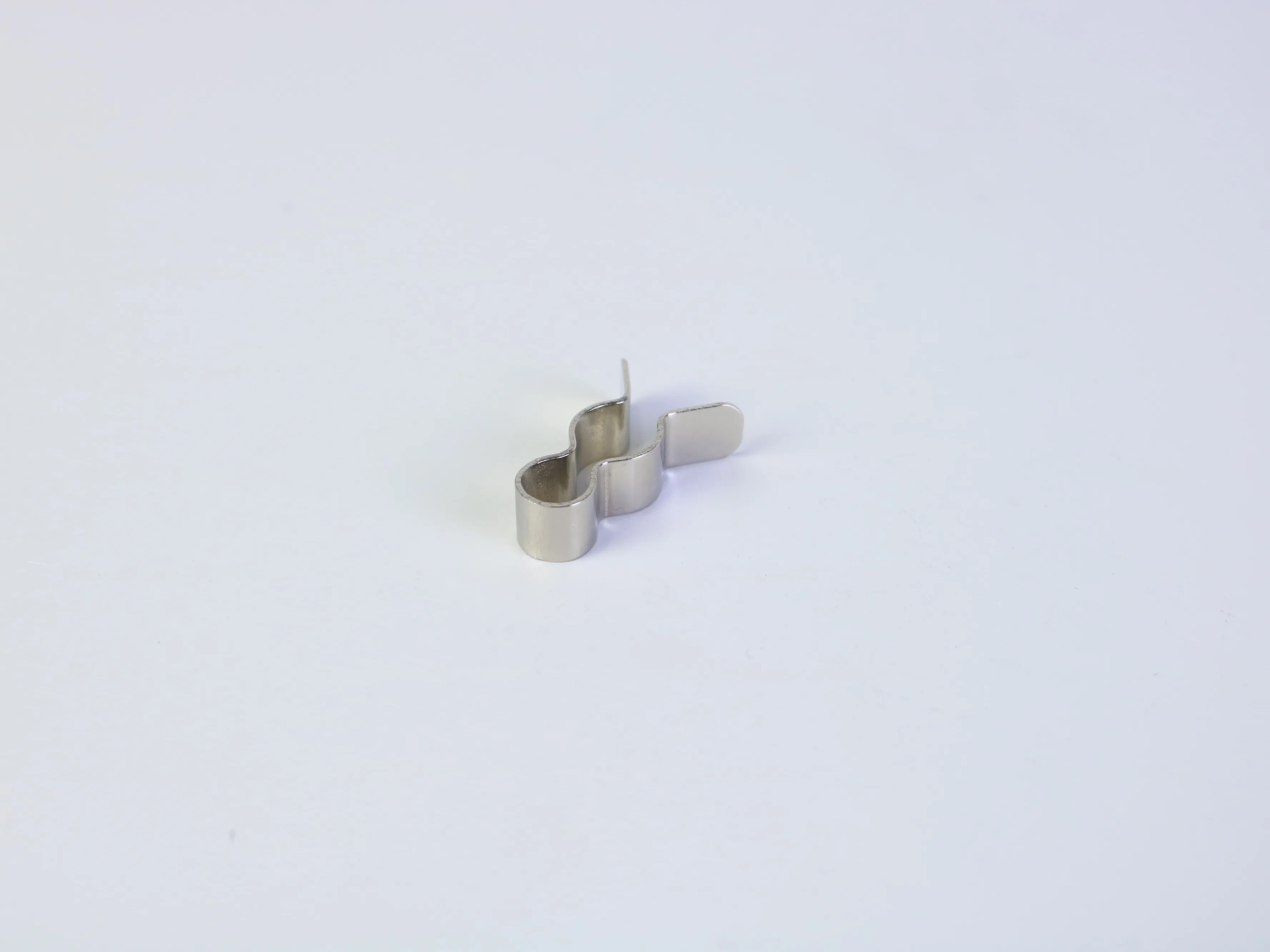
What the Images Reveal About the Part
The supplied images show a compact stamped spring clip identified in the file names as 65Mn. Its profile combines curved retention loops, wave-like spring sections, and flat tabs. This geometry is designed to create controlled contact, positioning, or clamping force while using a thin sheet-metal blank. The ruler image confirms that the component is small, but the exact length, width, strip thickness, and working force should be taken from the approved drawing rather than estimated from a photograph.
For engineers, the key point is that the part is not simply a flat stamping. Its final performance depends on the relationship between blank layout, bend radii, formed height, spring-back, and the mating assembly. A visually clean sample can still fail if the contact pressure, insertion force, or installed clearance is outside the application window.
How Stamping and Forming Affect Performance
A typical manufacturing route starts with coil-fed blanking, followed by progressive forming operations that create the loops, waves, and tabs. Tool design should control the transition between cutting and bending so that the edges do not interfere with assembly. The forming sequence also matters: bending a feature too early may distort the next station, while excessive compression can change the final spring height.
65Mn is commonly selected when a carbon-manganese spring steel is required, but the material condition, heat treatment, hardness, coating, and corrosion expectations must be specified by the customer. The bright appearance in the photos does not, by itself, verify a finish or corrosion grade.
Quality Checks Buyers Should Request
A robust inspection plan should connect dimensional data with real assembly behavior. Request first-article results for critical formed heights, loop diameters, tab position, burr condition, and overall profile. If the clip supplies retention or contact force, define the test fixture, loading direction, displacement, and acceptance range. Material certificates and surface-treatment records should be matched to the purchase specification. For repeat production, sampling frequency and packaging protection are also important because small spring parts can deform when loosely packed or stacked under load.
FAQ: 65Mn Stamped Spring Clips
QWhat is this component used for?
Its formed loops and tabs suggest a retention, contact, positioning, or clamping function. The final use depends on the mating assembly and approved drawing.
QCan the part be produced to a sample?
Yes, a sample can support reverse engineering, but production should be released against a drawing that defines material, thickness, critical dimensions, force, finish, and inspection requirements.
QWhat information is needed for a quotation?
Share the 2D or 3D file, 65Mn condition, strip thickness, surface requirement, annual volume, packaging needs, and the performance dimensions that affect assembly.
Ready to Review Your Stamped Spring Clip?
Send the drawing, sample photos, material requirement, and target volume for a practical review of forming risks, inspection points, and production feasibility.
Post time: Oct-22-2026


