
Precision CNC Gear Machining: Tolerances, Materials & Quality Explained
An engineer-level guide to how precision CNC gears are designed, machined and inspected — plus answers to the questions sourcing and design teams ask most.
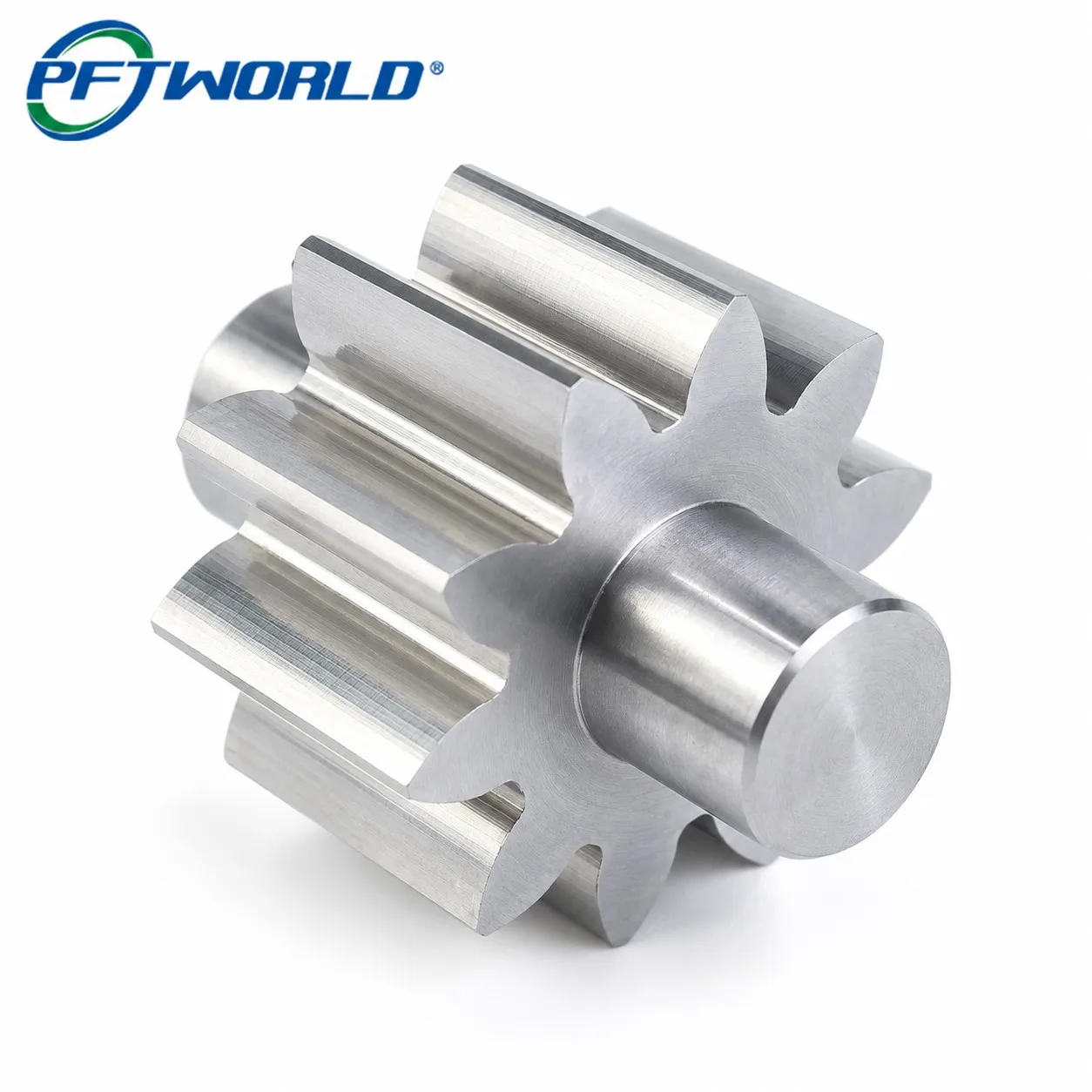
Why Gear Precision Matters
A gear’s performance is decided long before it meshes with another part — it is decided on the machine tool. Pitch diameter error, tooth profile deviation, and runout directly affect noise, backlash, load distribution and service life. In motion systems such as robotics, gearboxes and automotive drivetrains, even a few microns of inconsistency can translate into vibration, premature wear, or failure under cyclic load. This is why precision gear manufacturing is treated as a controlled engineering process, not a simple cutting operation.
Material Selection for Precision Gears
Material choice balances strength, wear resistance, weight and cost. The right selection depends on load, speed, operating environment and whether the gear will be heat treated after machining.
Machining Process & Tolerance Control
Precision gears are typically produced through CNC turning-milling, hobbing or gear shaping, followed by grinding for tight-tolerance applications. Multi-axis CNC centers hold tight positional accuracy on the bore, pitch circle and tooth form in a single setup, reducing stack-up error between operations.
Heat Treatment & Surface Finishing
Depending on load and wear requirements, gears may undergo carburizing, induction hardening or nitriding to increase surface hardness while retaining a tough core. Finishing options such as black oxide, zinc plating, anodizing or passivation improve corrosion resistance and appearance without affecting functional dimensions, provided tolerances are allotted for coating thickness.
Quality Assurance for Gear Components
Reliable gear suppliers inspect dimensions with CMM (coordinate measuring machines) and dedicated gear profile testers, checking tooth thickness, pitch error and runout against the design standard. Full dimensional reports, material certificates and first-article inspection (FAI) are standard deliverables under an ISO 9001 or IATF 16949 quality system.
Common Applications
Precision CNC gears are used across robotics joints and actuators, automotive transmissions, industrial gearboxes, medical equipment, and precision instruments — any system where motion accuracy, low backlash and long service life are required.
Frequently Asked Questions
What tolerance can CNC gear machining achieve?
Standard CNC hobbing and milling typically hold ±0.02 mm, while ground gears for high-precision drives can reach ±0.005 mm, depending on module size and gear grade.
Which material should I choose for my gear?
Alloy steel suits high-load, heat-treated gears; stainless steel suits corrosive environments; aluminum and brass suit lightweight or low-friction, low-load applications.
Do precision gears need heat treatment?
Not always. Heat treatment is recommended when gears carry heavy or cyclic loads and need higher surface hardness without sacrificing core toughness.
How is gear quality verified before shipment?
Through CMM dimensional inspection, gear profile/pitch testing, material certification, and a first-article inspection report aligned with the agreed drawing standard.
Can small-batch or prototype gears be produced?
Yes. CNC machining supports low-volume prototyping and small-batch production without hard tooling, making it cost-effective for design validation before scaling up.
What information is needed for a gear quotation?
A 2D/3D drawing with module, pressure angle, number of teeth, bore size, material and tolerance class allows for the most accurate quote and lead time.
Need a Precision Gear Reviewed or Quoted?
Share your drawing and we’ll review tolerances, material and manufacturability, then return a tailored quotation.
Post time: Nov-05-2026


