Custom CNC 316L Stainless Steel Milled Mounting Block Components


Product Overview
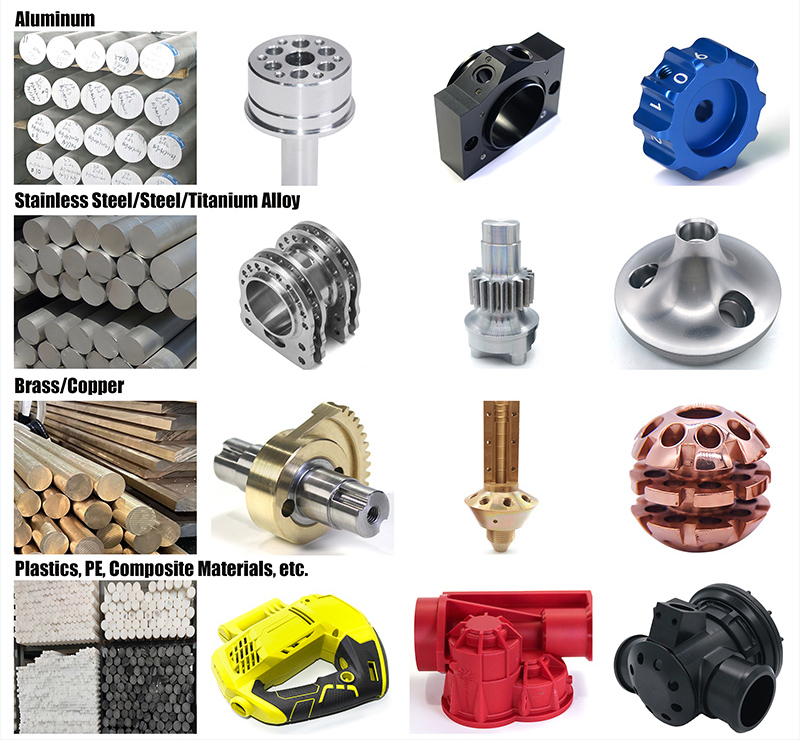
Custom CNC 316L Stainless Steel Milled Mounting Block Components are designed for mechanical assemblies requiring accurate mounting surfaces, stable geometry, corrosion resistance, and a refined surface finish.
The pictured component combines a cylindrical structural body with a raised mounting section and multiple precision-machined holes.
CNC milling allows the component geometry to be produced directly from customer CAD data, while polishing improves the final surface appearance and can be specified for functional or cosmetic surfaces.
316L stainless steel is widely selected for precision components where corrosion resistance, durability, and stable mechanical performance are important.
5. Product Specification
| Specification | Product Information |
|---|---|
| Product Name | Custom CNC 316L Stainless Steel Milled Mounting Block |
| Material | Stainless Steel 316L |
| Material Grade | 316L / UNS S31603 |
| Primary Process | CNC Milling |
| Finishing Process | Precision Polishing |
| Component Type | Mounting Block / Mechanical Mount / Structural Component |
| Body Geometry | Cylindrical Base With Raised Mounting Section |
| Machined Features | Holes, Mounting Surfaces, Curved Profiles, Steps |
| Thread Features | Customized According To Engineering Drawing |
| Surface Finish | Polished Finish / Custom Finish |
| Dimensional Tolerance | Drawing-Specified |
| General Machining Capability | Up To ±0.01 mm Where Applicable |
| Special Feature Capability | Up To ±0.005 mm Where Applicable |
| Surface Roughness Capability | Ra 0.1–3.2 μm Depending On Requirement |
| Production Stage | Prototype, Low Volume, Batch Production |
| Drawing Formats | STEP, STP, IGES, DWG, DXF, PDF |
| Inspection | Dimensional Inspection, CMM, Thread Gauging Where Required |
| Customization | CAD Drawing, Engineering Drawing Or Sample |
| Surface Treatment | Polishing, Passivation, Electropolishing And Other Options |
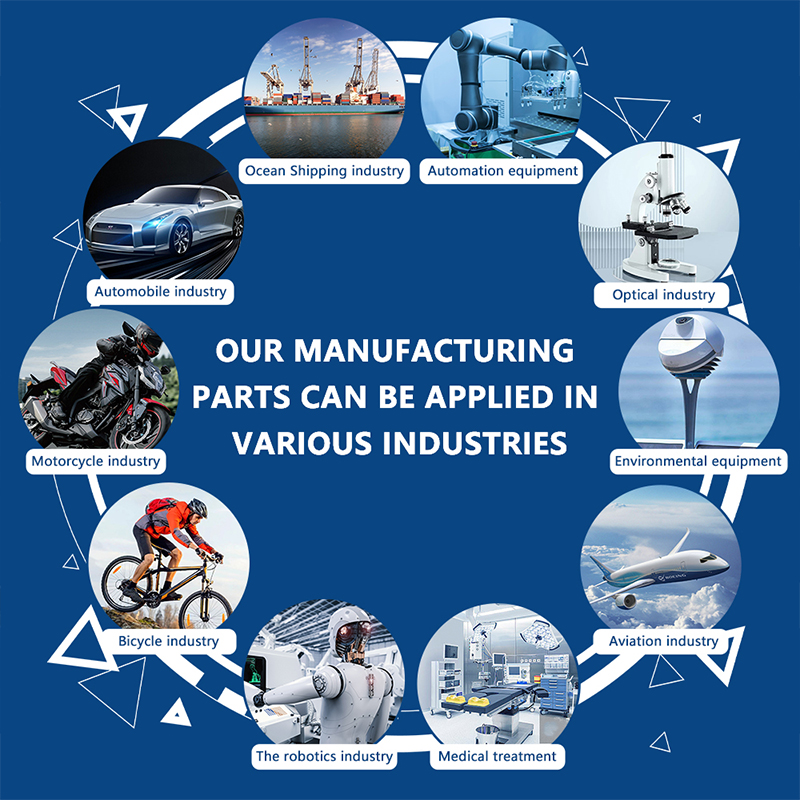
| Application | Machinery, Automation, Fixtures, Instrumentation, OEM Equipment |
Important: The photograph does not establish the actual tolerance, hole dimensions, thread standard, wall thickness, or surface roughness of this individual component. Those values should be controlled by the customer's engineering drawing. PFTWORLD currently publishes general CNC capability of ±0.01 mm, special areas of ±0.005 mm, and Ra 0.1–3.2 μm; these should be presented as manufacturing capability rather than guaranteed values for every part.
6. Material — 316L Stainless Steel
Why 316L?
316L is a strong choice for mounting components exposed to moisture, corrosive environments, cleaning chemicals, or demanding industrial conditions.
Key advantages include:
- Excellent Corrosion Resistance
- Good Mechanical Stability
- Good Weldability
- Suitable Surface Finishing Characteristics
- Strong Resistance To Many Industrial Environments
- Long-Term Service Performance
316L is commonly used in industrial equipment, instrumentation, medical equipment, pharmaceutical systems, food-processing machinery, marine applications, and chemical-processing equipment.
7. CNC Milling Process
Precision Profile Machining
CNC milling can produce:
- Curved External Profiles
- Raised Mounting Areas
- Flat Reference Surfaces
- Circular Features
- Recessed Areas
- Drilled Holes
- Threaded Holes
- Chamfers
- Steps And Shoulders
316L requires controlled machining because it can work-harden during cutting. Stable cutting conditions and appropriate tooling help maintain dimensional consistency and surface quality.
8. Polishing Process
The supplied product information identifies polishing as a secondary process.
Polishing can be specified to improve:
- Surface Appearance
- Smoothness
- Cleanability
- Contact Surface Quality
- Cosmetic Consistency
For applications requiring more controlled stainless-steel surface conditions, additional processes such as passivation or electropolishing can be considered according to the engineering specification.
9. Engineering Features
This type of CNC-milled mounting component can incorporate:
Precision Mounting Holes
Positioned according to the customer's assembly requirements.
Threaded Holes
Available with customer-specified thread diameter, pitch, depth, and standard.
Curved Profiles
CNC milling allows non-flat external profiles to be manufactured directly from CAD geometry.
Reference Surfaces
Critical mounting faces can be controlled for dimensional accuracy and positional requirements.
Custom Interfaces
Additional holes, pockets, grooves, steps, and locating features can be incorporated into the same component.
10. Quality Control
Dimensional Inspection
Critical dimensions can be verified using:
- CMM
- Micrometers
- Calipers
- Height Gauges
- Pin Gauges
- Thread Gauges
PFTWORLD's current website lists CMM, height measuring instruments, roughness detectors, micrometers, plug gauges, thread gauges, and pin gauges among its inspection equipment.
Surface Inspection
Inspection can include:
- Visual Inspection
- Surface Roughness Measurement
- Polishing Quality
- Edge And Burr Inspection
Documentation
Depending on project requirements:
- Dimensional Inspection Report
- Material Certificate
- Certificate Of Conformance
- First Article Documentation
11. Typical Applications
Industrial Machinery
- Machine Mounts
- Mechanical Supports
- Equipment Interfaces
- Structural Components
- Automation Fixtures
- Motion-System Components
- Sensor Mounts
- Equipment Mounting Parts
- Instrument Mounting Components
- Sensor Interfaces
- Precision Equipment Structures
- Custom Mechanical Assemblies
- Replacement Components
- Prototype Hardware
- Production Mounting Components
Industrial Automation
Instrumentation
OEM Equipment
Corrosion-Sensitive Equipment
316L makes the component particularly attractive where stainless-steel corrosion resistance is important.
12. Buyer Pain Point → Solution
| Buyer Concern | Recommended Page Message |
|---|---|
| Complex Geometry | CNC Milling From CAD Geometry |
| Multiple Mounting Features | Integrated Hole And Surface Machining |
| Corrosion Exposure | 316L Stainless Steel |
| Visible Surface Requirements | Controlled Polishing |
| Prototype Requirements | Low-Volume CNC Manufacturing |
| Difficult Assembly Fit | Drawing-Based Dimensional Control |
| Multiple Suppliers | CNC Machining And Finishing Coordination |
| Inconsistent Batches | Process-Controlled Repeat Manufacturing |
About Us
Processing Material
Application
POSITIVE FEEDBACK
FAQ
1. Are you a manufacturer or a trading company?
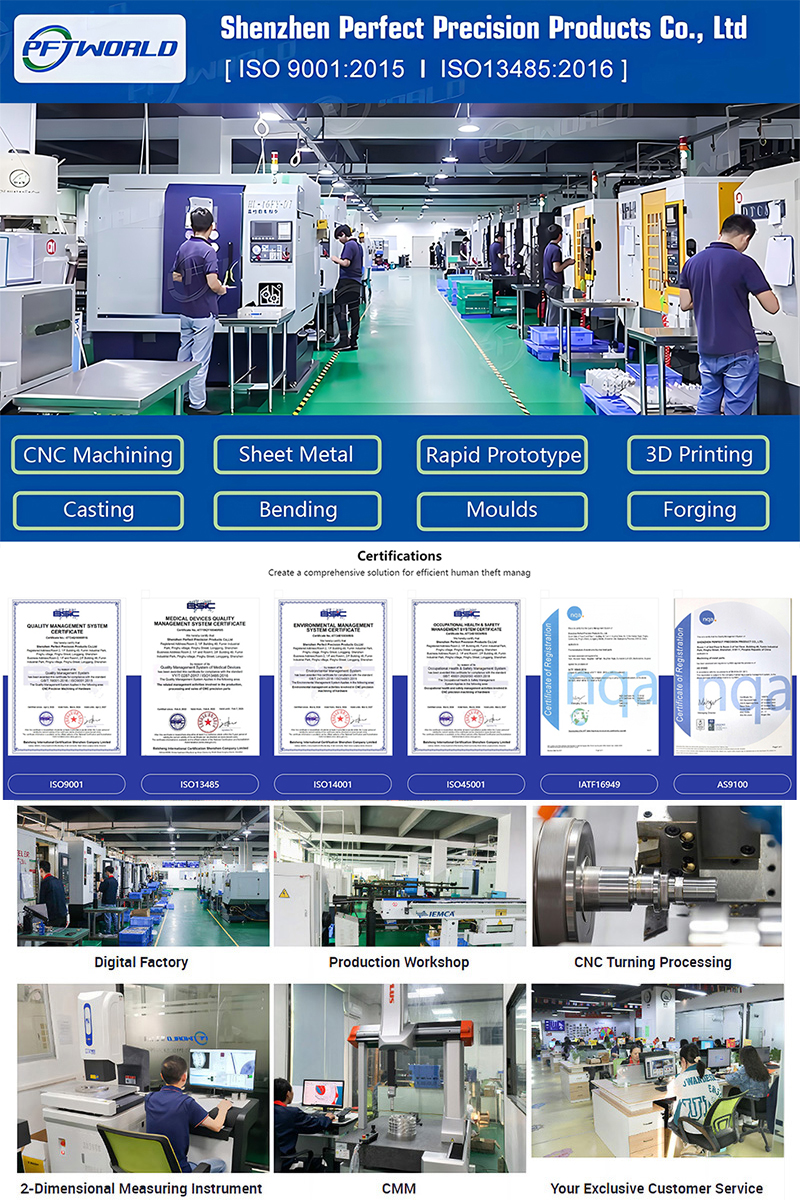
We are a factory located in Shenzhen, China, with 20 years of rich experience, covering 6000 square meters. Complete facilities, including 3D quality inspection equipment, ERP system and 40 machines. If necessary, we can provide you with material certificates, sample quality inspection and other reports.
2. How to get a quote?
Detailed drawings (PDF/STEP/IGS/DWG...), including quality, delivery date, materials, quantity, surface treatment and other information.
3. Can I get a quotation without drawings? Can your engineering team draw for my creativity?
Of course, we are also glad to receive your samples, pictures or detailed size drafts for accurate quotation.
4. Can you provide samples before mass production?
Of course, the sample fee is necessary. If possible, it will be returned during mass production.
5. What is the delivery date?
Generally, the sample lasts for 1-2 weeks and the batch production lasts for 3-4 weeks.
6. How do you control quality?
(1) Material Inspection - Check material surfaces and approximate dimensions.
(2) First inspection of production - ensure critical dimensions in mass production.
(3) Sampling inspection - check the quality before delivery to the warehouse.
(4) Preshipment inspection - 100% inspection by QC assistant before shipment.
7. After-sales service team
If you have any problems after receiving the product, you can provide feedback through voice call, video conference, email, etc. within one month. Our team will provide you with solutions within a week.