
CNC Machined Curved Bracket with Mounting Ears
CNC Machined Curved Bracket with Mounting Ears
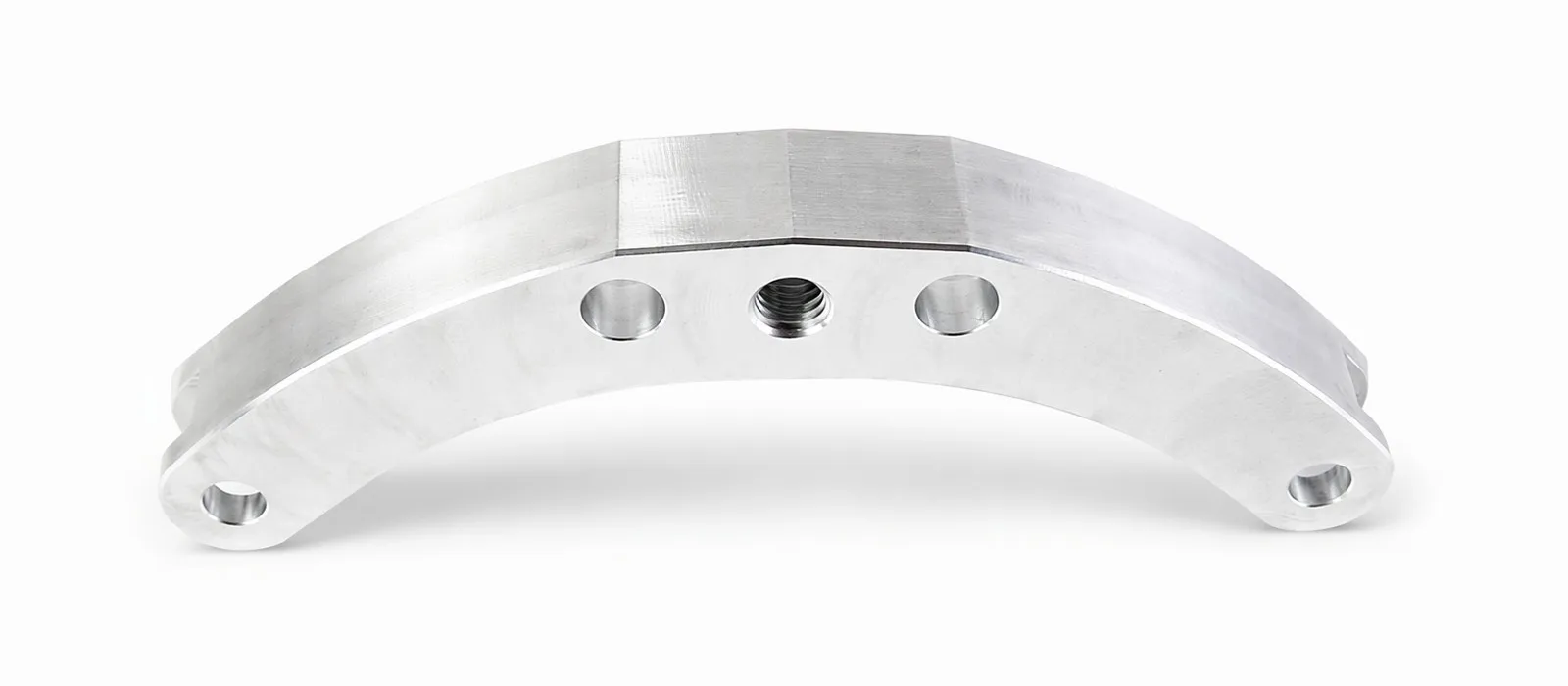
Arc-shaped machined mounting component with bored end ears, three central bores and a threaded centre hole, produced from your 2D drawing or STEP model.
Product Overview
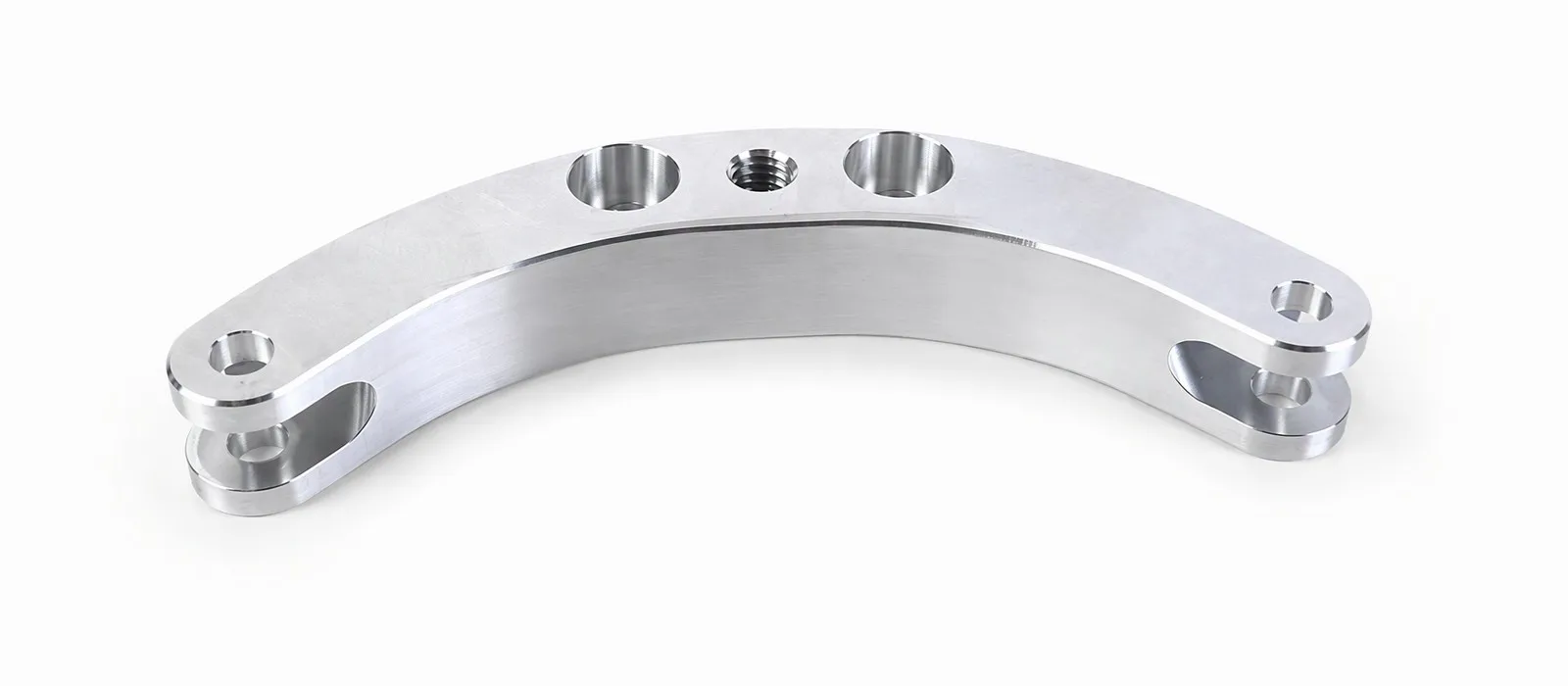
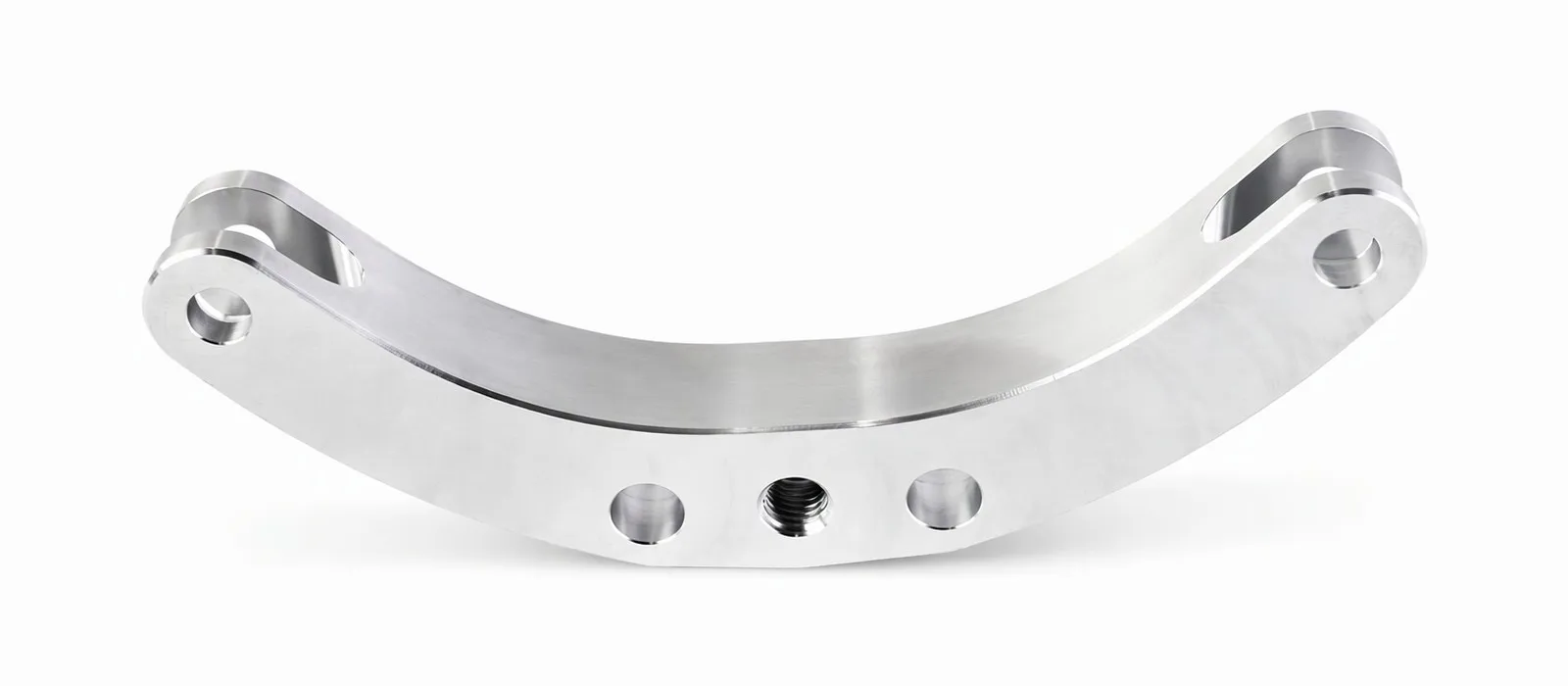
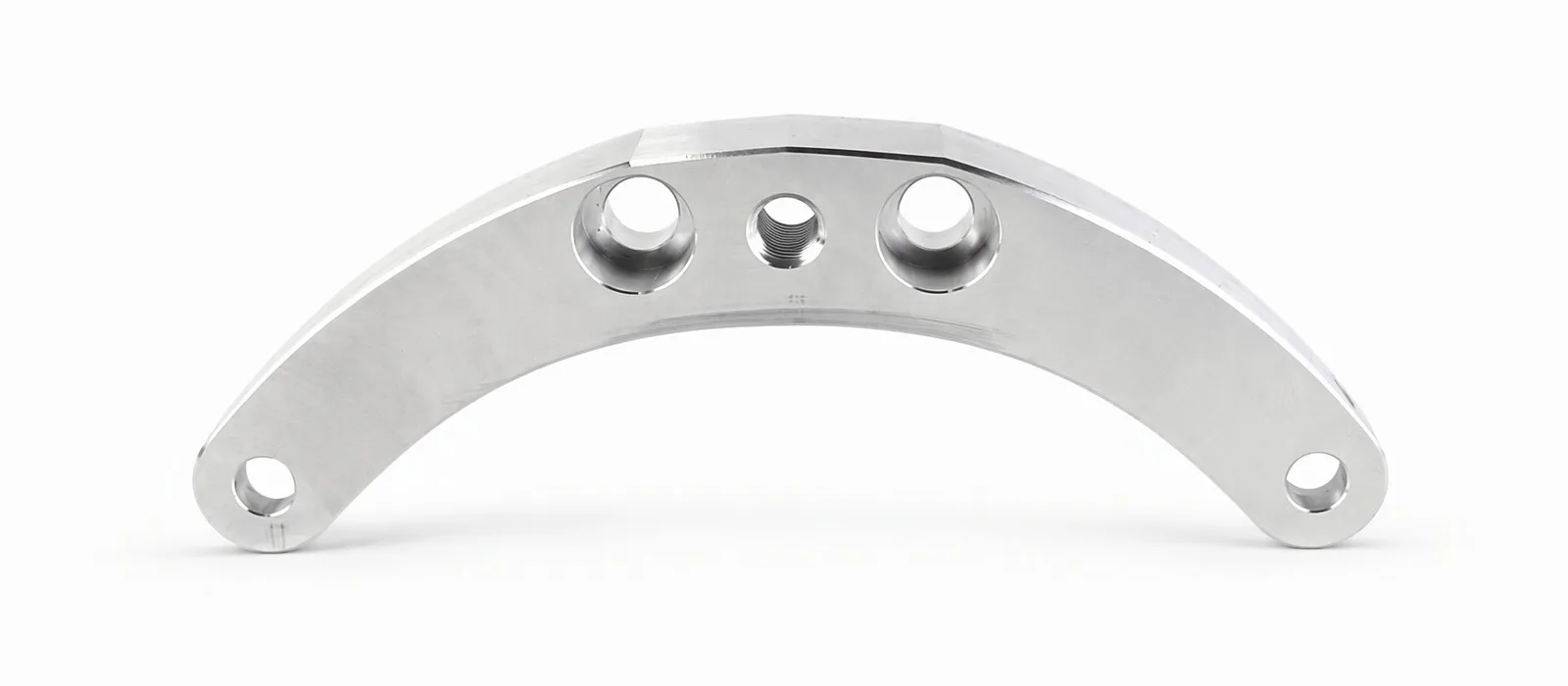
This CNC machined curved bracket is an arc-shaped mounting component with bored mounting ears at both ends and three machined bores across its centre face, one of them threaded. The bored ears, the internal thread, the milled flat faces and the concentric inner and outer radii are all visible in the photographs, and the part is built from customer files rather than held as a stock line item. Send a 2D drawing or a STEP model and our engineers return DFM feedback together with a project quotation.
Key Features
Specifications
| Attribute | Value |
|---|---|
| Part Type | CNC machined curved mounting bracket with clevis ears |
| Visible Features | Two bored end ears, clevis slots, three centre bores, threaded centre bore, milled flats and steps |
| Body Form | Single curved segment with concentric inner and outer radii, uniform matte machined surface |
| Material | Per drawing, confirm with our engineer |
| Tolerance | Per drawing, confirm with our engineer |
| Surface Finish | Per drawing; optional anodising, passivation or blasting on request |
| Dimensions | Per drawing; the photographs show one part only, with no scale reference |
| Accepted Drawings | 2D drawings (PDF or DWG) plus 3D STEP models; STEP preferred |
| Lead Time and MOQ | Per drawing and per project |
| Quotation | Per project, request a quote |
Product Gallery
How It Is Machined
The sequence below is general engineering practice for a part of this geometry; the routing for your order is fixed only after we read your drawing.
Stock is fixed on a machined datum and the curved profile is produced with layered end-mill toolpaths, which sets the outer radius, the inner radius and the flat crown faces in one setup. The centre bores, the ear bores and the clevis slots are then drilled, bored and milled, and the centre hole receives its internal thread by tapping or thread milling. Finish passes clean up the shoulders and edges before deburring, so the bores stay free of lips that would fight a fastener seat.
Quality checks concentrate on the features that carry the assembly: crown flatness, ear bore diameter and position, centre-to-centre span between the ears, bore perpendicularity to the mounting face, thread go and no-go verification, plus visual review of the machined finish. A dimensional report can be supplied with the shipment when your drawing calls for it.
Where Parts Like This Are Used
These application notes are general practice for a curved bracket with bored ears and a central threaded bore. Your own use case is welcome even if it is not listed.
Buyer Questions
QWhich files do you need to quote this bracket?
A 3D STEP model is preferred, together with a 2D drawing that shows the critical bores and tolerances. If you only have a sketch or a sample part, send that and we will confirm what is still missing. We quote from files, not from photographs, because the images carry no scale.
QWhich materials can you machine for parts like this?
As general practice we machine aluminium alloys, carbon and stainless steels, brass, copper and engineering plastics such as POM or PEEK. The grade and bar state for your part are set on the drawing, so we do not assign a material from a photo. Tell us the environment and load and our engineers can suggest options.
QDo you give DFM feedback before we commit to an order?
Yes. Submit the drawing or model and we review feature accessability, bore depth to diameter ratio, thread run-out, radii that a tool cannot reach and clamping on a curved face. You receive the findings with the quotation, so changes can be made before the first cut.
QWhat tolerances and finishes are typical for this geometry?
Tolerances and finish are always taken from your drawing, so no value is stated here. As general practice, bored ear holes and the centre bore are the features that most often carry a tighter call, and the crown flats are where flatness is checked. If a surface must be sealed, anodised or coated, note it on the drawing.
QHow is quality controlled on a curved part with several bores?
The critical items are the span between the ear bores, bore diameter and perpendicularity, the centre bore and its thread, and flatness of the machined crown. We measure against your drawing rather than a generic checklist, and thread limits plus a dimensional report can be included when required.
QCan you start from one or two prototype pieces?
Prototype and low-volume runs are handled on the same routing as production, which is the practical way to validate hole positions before tooling or assembly is frozen. Quantity and cadence are confirmed per project, and repeat orders follow your released drawing revision.
QHow do we get a price and a lead time?
Both are quoted per project, since material, quantity, finish and inspection requirements change the answer. Send the files through the contact page and you will receive a project quotation with the schedule stated in writing.
Send Your Drawing, Get DFM Feedback and a Quotation
Upload a 2D drawing or a STEP model of your curved bracket and our engineers reply with DFM notes, machaning options and a project quotation.


