
OEM vs Custom CNC Machined Aluminum Parts: A Buyer Guide
When sourcing CNC machined aluminum parts, buyers often face a critical decision: OEM (standardized parts) or custom-designed parts. Choosing the right type affects cost, lead time, design flexibility, and production efficiency. This guide helps engineers, procurement teams, and designers make an informed choice in 2026.
1. Understanding OEM Aluminum Parts
OEM (Original Equipment Manufacturer) aluminum parts are pre-designed, standardized components produced in large volumes.
Advantages:
-
Lower cost per unit due to economies of scale
-
Shorter lead times as parts are already manufactured
-
Proven quality and performance
-
Easier procurement from existing suppliers
Limitations:
-
Limited to existing designs and specifications
-
May not fit specialized applications or unique assemblies
-
Less flexibility in material selection, tolerance, or finishing
Best for: Replacement parts, standard brackets, flanges, housings, and high-volume components.
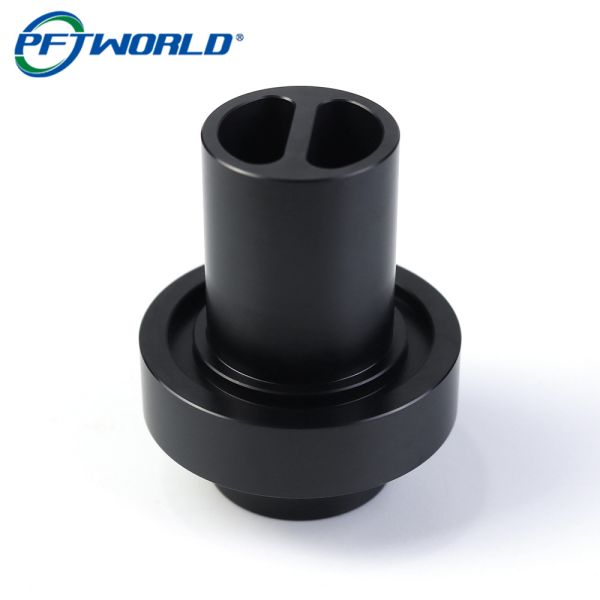
2. Understanding Custom CNC Aluminum Parts
Custom parts are designed according to specific project requirements, produced with tailored tolerances, features, and finishes.
Advantages:
-
Fully tailored to design specifications and functional requirements
-
Flexibility in material selection (6061, 7075, 2024, 5052, etc.)
-
Can include complex geometries or multi-axis features
-
Allows prototype and low-volume production before scaling
Limitations:
-
Higher unit cost, especially for small volumes
-
Longer lead times for design, prototyping, and machining
-
Requires more engineering collaboration and communication with the supplier
Best for: Aerospace components, robotics, EV parts, industrial machinery, and unique enclosures.
3. Cost Comparison: OEM vs Custom
| Factor | OEM Parts | Custom Parts |
|---|---|---|
| Unit Cost | Lower due to volume | Higher, depends on complexity |
| Setup Cost | Minimal | High (CAM programming, tooling, fixtures) |
| Batch Size | Large (often 100+) | Flexible (1–500+) |
| Design Cost | Included in part | Extra for engineering & prototyping |
| Total Procurement Cost | Lower for standardized needs | Potentially higher, but optimized for specific requirements |
Tip: Consider total cost of ownership, including redesign, assembly fit, and functional performance, not just the unit price.
4. Lead Time Comparison
-
OEM Parts: Usually available in stock or produced quickly for repeat orders (1–7 days domestically)
-
Custom Parts: Require design review, CAM programming, and CNC machining, typically 7–21 days for prototypes, longer for larger batches
Strategy: Use OEM for standard, time-critical replacements and custom parts when functionality and fit are critical.
5. Tolerance and Surface Finish
-
OEM Parts: Tolerances may be standardized (±0.05 mm), sufficient for non-critical applications
-
Custom Parts: Tolerances can be as tight as ±0.01 mm; surface finish tailored to application (Ra 0.4–1.6 μm)
High-precision applications like EV components, aerospace brackets, and electronics housings often require custom CNC aluminum machining.
6. Choosing Between OEM and Custom
Consider these factors:
| Decision Factor | Recommendation |
|---|---|
| Application Specificity | Custom if exact fit/function is needed; OEM if standard dimensions suffice |
| Volume | OEM for large volume to reduce cost; custom for low-to-medium volume |
| Lead Time | OEM for immediate availability; custom requires design and machining time |
| Budget | OEM for lower upfront cost; custom allows design optimization for long-term savings |
| Quality & Tolerance | Custom for critical tolerances; OEM for general-purpose applications |
7. Supplier Considerations
When sourcing custom CNC aluminum parts:
-
Ensure supplier has multi-axis CNC machines for complex geometries
-
Verify quality systems: ISO 9001, AS9100, or industry-specific certifications
-
Check DFM (Design for Manufacturability) support for cost and efficiency
-
Evaluate prototyping capability for testing before full production
For OEM parts, ensure:
-
Supplier maintains consistent stock and proven quality
-
Replacement parts meet specifications and tolerances
Key Takeaways
-
OEM aluminum parts: Cost-effective, fast, and standardized; best for high-volume or replacement applications.
-
Custom CNC aluminum parts: Flexible, high-precision, tailored to unique designs; ideal for aerospace, robotics, EVs, and industrial machinery.
-
Decision strategy: Match part complexity, volume, budget, and tolerance requirements to the type of part.
-
Supplier choice: Essential for quality, lead time, and DFM collaboration in custom parts; reliability and stock availability for OEM parts.
Post time: Mar-20-2026


