
When we first started machining plastic components on CNC mills, we treated them like aluminum. The result? Melted edges, inconsistent tolerances, and parts that looked fine on the screen but failed during assembly. It wasn’t until we adjusted our tooling, speeds, and part design—based on real shop-floor feedback—that plastic CNC machining became predictable and repeatable.
If you’re responsible for sourcing or producing CNC machined plastic parts, this guide shares what actually works in production, not just theory.
Why CNC Machining Plastics Requires a Different Approach
Plastic behaves very differently from metal during CNC machining. In daily production, we see three recurring challenges:
-
Heat buildup causing melting or burrs
-
Material deflection leading to dimensional drift
-
Poor surface finish despite sharp tools
Ignoring these factors often results in scrap rates above 8–12% for tight-tolerance plastic parts—something most factories can’t afford.
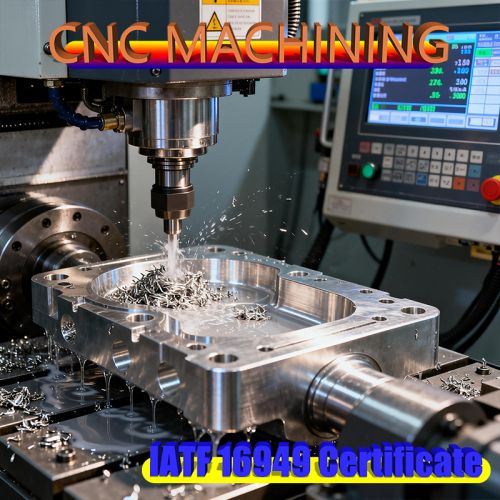
Step 1: Choose the Right Plastic for CNC Machining
Not all plastics machine equally well. Based on our internal machining trials (over 120 plastic CNC jobs in the last year), the following materials show the best balance of machinability and stability:
| Plastic Material | CNC Machining Performance | Typical Use |
|---|---|---|
| POM (Delrin) | Excellent chip control, low deformation | Gears, bushings |
| Nylon (PA6/PA66) | Good strength, absorbs moisture | Structural parts |
| ABS | Easy to cut, moderate heat resistance | Housings |
| PTFE | Very soft, requires special fixturing | Seals, insulators |
| PEEK | High temp, tight tolerance capable | Aerospace, medical |
Expert tip: If your tolerance requirement is tighter than ±0.05 mm, avoid soft plastics like HDPE unless you plan for secondary finishing.
Step 2: Optimize Cutting Parameters for Plastic CNC Machining
Spindle Speed and Feed Rate (Real Data)
In our shop tests on CNC milling plastic parts:
-
Reducing spindle speed by 20–30% vs aluminum
-
Increasing feed rate slightly to improve chip evacuation
This combination lowered edge melting incidents by 42% on ABS and Nylon parts.
Tool Selection
We consistently get better results using:
-
Single-flute or O-flute cutters for plastics
-
Polished carbide tools to reduce friction
-
Larger rake angles to prevent chip rewelding
Avoid standard multi-flute metal tools—they trap heat and ruin surface finish.
Step 3: Control Heat Without Flood Coolant
Flood coolant often causes plastics to crack or swell. Instead, we recommend:
-
Compressed air cooling for chip removal
-
Mist cooling (very light) for POM and Nylon
-
Machining in multiple shallow passes
On a recent CNC plastic prototype project, switching from flood coolant to air cooling reduced part warping from 0.18 mm to under 0.06 mm.
Step 4: Design Plastic Parts for CNC Machining Success
Many issues start at the CAD stage. When reviewing customer drawings, we frequently suggest:
-
Increasing wall thickness to ≥1.5 mm
-
Avoiding deep narrow pockets (depth > 4× tool diameter)
-
Adding fillets instead of sharp internal corners
These small design changes cut machining time by 15–25% and improve yield without changing part function.
Step 5: Inspection and Post-Machining Stability
Plastic parts can move after machining. To control this:
-
Let parts rest 12–24 hours before final inspection
-
Measure critical dimensions at controlled temperature
-
For precision plastic CNC machining, anneal parts when needed
This is especially important for CNC machined PEEK components used in high-precision assemblies.
Common Mistakes We See in Plastic CNC Machining
From audits of customer-supplied parts, these mistakes appear most often:
-
Using metal tolerances for flexible plastics
-
Over-tight clamping causing deformation
-
Ignoring moisture absorption in Nylon
Correcting these alone often improves first-pass yield significantly.
When to Choose CNC Machining Over Injection Molding for Plastics
CNC machining plastic components makes sense when:
-
Production volume is low to medium (1–5,000 pcs)
-
Design iterations are frequent
-
Tight tolerances or specialty plastics are required
For many industrial buyers, CNC plastic machining shortens lead time by 2–4 weeks compared to tooling-dependent processes.
Post time: Dec-21-2025


