
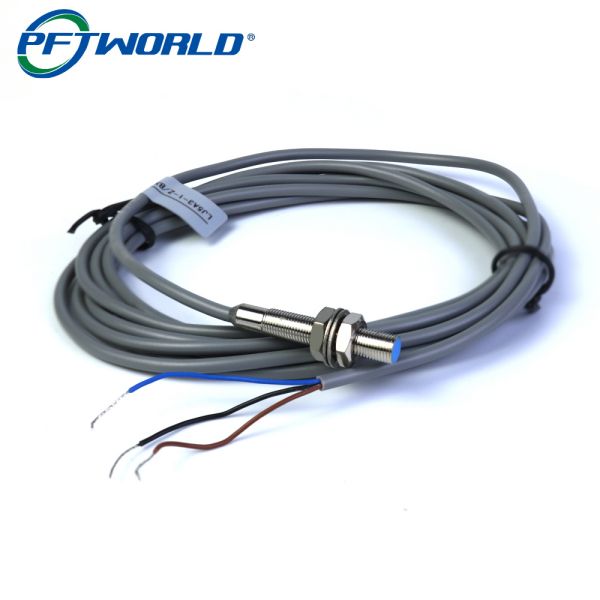
Inductive proximity switches are essential components in modern industrial automation, offering reliable, contactless detection of metallic objects. Choosing the right switch is critical to ensure accuracy, durability, and safety in your system. This guide will help you select the most suitable inductive proximity switch for your application.
1. Understand the Basics
Inductive proximity switches detect metallic objects without physical contact, using electromagnetic fields. They are ideal for environments with dust, dirt, or vibration where mechanical sensors might fail. Key performance factors include sensing distance, switching frequency, and output type.
2. Identify Your Target Material
Since inductive switches respond only to metals, identifying the target object—steel, aluminum, or copper—is crucial. Each metal interacts differently with the sensor’s electromagnetic field, affecting detection distance. For example, ferrous metals like steel typically allow longer sensing ranges than non-ferrous metals.
3. Consider Sensing Distance and Range
Sensing distance is the gap at which the sensor detects an object. Choose a switch with a sufficient range for your automation layout, accounting for safety margins. Typical ranges vary from a few millimeters for miniature sensors to several centimeters for standard industrial units.
4. Evaluate Environmental Conditions
Operating conditions greatly influence sensor performance. Consider temperature, humidity, dust, and exposure to oils or chemicals. For harsh environments, choose a sensor with IP67 or higher protection ratings.
5. Decide on Mounting and Size
Sensors come in various housing types: cylindrical, rectangular, flush, or non-flush. Flush sensors can be embedded in metal surfaces without interference, while non-flush sensors provide longer detection distances. Ensure the sensor size fits your mechanical design constraints.
6. Check Electrical Specifications
Select a sensor compatible with your system’s voltage and current requirements. Consider switching output types—PNP, NPN, or analog—based on your controller or PLC setup. Pay attention to switching frequency if your application involves fast-moving objects.
7. Reliability and Lifespan
Finally, choose sensors from reputable manufacturers to ensure consistent performance and long operational life. Inductive proximity switches have no moving parts, but quality construction ensures resistance to vibration, shock, and electrical noise.
By carefully evaluating these factors, you can choose an inductive proximity switch that maximizes efficiency and reliability in your industrial automation system. Proper selection reduces downtime, enhances precision, and ensures safe operations.
Looking for high-quality inductive proximity switches for your automation projects? Contact us today to find the perfect solution for your industrial needs.
Post time: Jan-25-2026


