
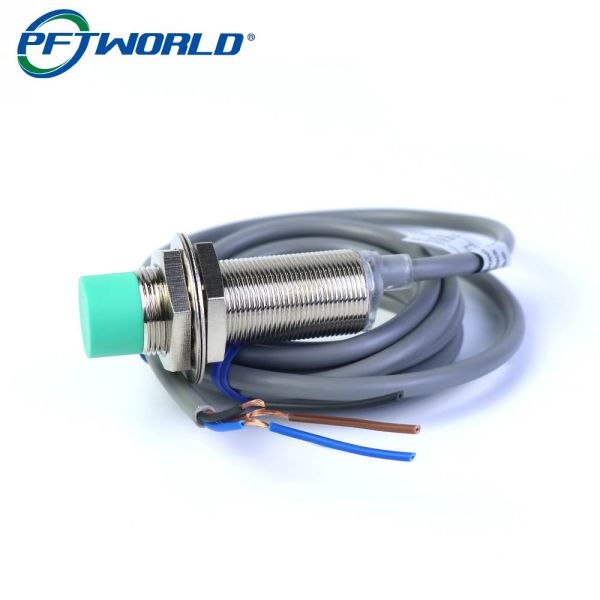
In industrial automation, robotics, and manufacturing, proximity sensors play a critical role in detecting the presence or absence of objects without physical contact. Choosing the right sensor can significantly impact system efficiency, reliability, and safety. Here’s a practical guide to help you make the best choice.
1. Understand the Types of Proximity Sensors
Proximity sensors are broadly classified based on the detection principle:
-
Inductive Sensors: Ideal for detecting metallic objects. They are robust, reliable, and widely used in harsh industrial environments.
-
Capacitive Sensors: Can detect both metallic and non-metallic materials, such as plastic, glass, or liquids. They are sensitive and versatile.
-
Photoelectric Sensors: Use light (infrared or laser) to detect objects. Best for longer-range detection or transparent materials.
-
Ultrasonic Sensors: Detect objects using sound waves. Perfect for detecting irregular or soft surfaces where other sensors might fail.
2. Determine the Sensing Range and Environment
The sensing range—the maximum distance at which the sensor can reliably detect an object—is crucial. For instance, inductive sensors typically detect objects within a few millimeters, while ultrasonic or photoelectric sensors can reach several meters.
Additionally, consider the operating environment. Factors such as temperature, humidity, dust, and exposure to chemicals can affect sensor performance. Sensors with high IP ratings (e.g., IP67) are suitable for harsh conditions.
3. Consider Output Type and Integration
Proximity sensors can provide digital (ON/OFF) or analog signals, depending on your system’s control requirements. Ensure compatibility with your PLC, microcontroller, or automation system. Also, check the response time—faster sensors are essential for high-speed applications.
4. Focus on Reliability and Maintenance
Choose sensors from reputable manufacturers that provide consistent performance and long service life. Consider maintenance needs; non-contact sensors generally require less maintenance compared to mechanical switches.
5. Additional Tips
-
Verify power supply requirements and electrical compatibility.
-
Consider mounting options and size constraints for your application.
-
Review datasheets and application notes to match sensor specifications precisely with your operational needs.
Selecting the right proximity sensor is more than just picking a type; it’s about ensuring reliable detection, minimal downtime, and long-term system efficiency.
Looking for high-quality proximity sensors for industrial automation or robotics? Explore our wide range of reliable inductive, capacitive, photoelectric, and ultrasonic sensors. Contact us today for expert advice and tailored solutions to optimize your production processes.
Post time: Jan-18-2026


