
Growing Demand for Lightweight CNC Aluminum Parts in Robotics (2026 Trend)
In 2026, there’s a significant increase in demand for CNC‑machined aluminum parts in the robotics industry, driven largely by trends toward lightweight design, improved performance, and expanded automation adoption. Manufacturers are increasingly using aluminum structural components instead of heavier materials to achieve better efficiency, flexibility, and precision.
Why Robotics Needs Lightweight Aluminum Parts
Robots, from industrial automation arms to service and humanoid robots, place a strong emphasis on lightweight and high‑strength components:
✔ Weight Reduction Improves Performance
Aluminum’s density is about one‑third that of steel, yet its strength and stiffness can be enhanced using high‑strength alloys such as 7075 or 6061. This makes aluminum an excellent choice for robot skeletons, joints, and structural parts that require high stiffness with reduced mass.
✔ Lower Inertia for Faster Motion
Lighter components reduce the motor effort needed for movement, improving energy efficiency and dynamic response, especially for collaborative robots (cobots) and humanoid robots with complex articulated joints.
✔ Reduced Wear and Power Consumption
Lower mass means less wear on actuators and gearboxes and lower power consumption, extending service life and reducing operating costs — key factors in manufacturing, logistics, and service robotics.
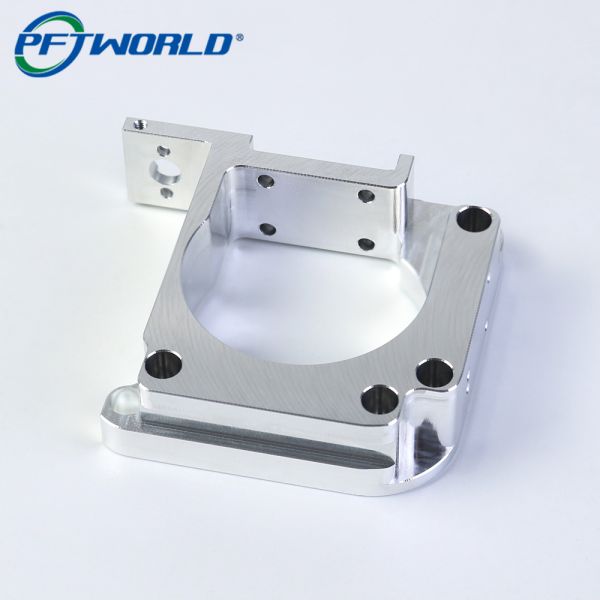
Structural Aluminum Parts: Core Applications in Robotics
CNC‑machined aluminum parts are increasingly used in:
-
Robot frames and chassis — lightweight structural backbone
-
Arm links and joint housings — high precision and strength
-
End‑effectors and tooling mounts — durable and low inertia
-
AGV (Automated Guided Vehicle) bodies — lightweight yet strong bodies
-
Medical and service robot components — accurate, corrosion‑resistant parts
Market Momentum Behind Aluminum Use in Robotics
Recent industry data show:
-
Robotics applications are expanding rapidly, with aluminum becoming the dominant material for precision components in many robots. Over 70% of robot structural parts are now manufactured from aluminum alloys because of their processing ease and performance benefits.
-
The robotics aluminum market is growing faster than traditional industrial materials, and advanced alloy usage is being adopted across collaborative, mobile, medical, and humanoid robots.
For example, aluminum profile usage in industrial robot frames and AGVs has risen sharply, partly because CNC machining enables tight tolerances, complex geometries, and structural integrity.
Why CNC Machining Spikes Alongside Lightweight Design
CNC machining plays a pivotal role in fulfilling the robotics industry’s quality and precision requirements:
-
Complex geometries: CNC machines produce precise multi‑axis contours for joints and interfaces.
-
Tight tolerances: Robotic parts often require ±0.01–0.05 mm accuracy to ensure assembly performance.
-
Surface finish quality: Smooth machined surfaces reduce friction and improve mechanical efficiency.
-
Batch customization: CNC allows flexible small‑batch production for specialized robot designs.
This blend of structural performance and manufacturability drives robotics OEMs to increasingly source precision CNC aluminum parts.
Looking Ahead: Robotics Growth and Aluminum Demand
Industry projections suggest that robotics production will continue rising due to increased automation, labor shortages, and industrial AI adoption. As robot unit shipments grow, demand for lightweight structural parts — especially CNC‑machined aluminum components — is expected to follow.
-
Cobots and service robots often require low inertia lightweight structures for safety and performance.
-
Humanoid robots increasingly use high‑strength aluminum skeletons and housing parts to meet mobility and endurance requirements.
Key Takeaways
Aluminum’s lightweight, high‑strength, and machinability advantages — combined with advances in CNC machining and precision manufacturing — are fueling rapid growth in robotics applications:
-
Robotics manufacturers increasingly choose aluminum for weight reduction and energy efficiency.
-
CNC machining enables complex, tight‑tolerance aluminum components that support next‑gen robot designs.
-
Market trends point to continued expansion of robotics aluminum part demand, spanning industrial, service, mobile, and humanoid robots.
In 2026, lightweight CNC aluminum parts are essential to robotics performance, production flexibility, and long‑term competitiveness.
Post time: Mar-26-2026


