
CNC Machining Aluminum Parts: Tolerance and Surface Finish Guide 2026
Aluminum is one of the most widely used materials in aerospace, automotive, electronics, and industrial equipment due to its lightweight, corrosion resistance, and machinability. In 2026, CNC machining aluminum parts requires strict tolerance control and surface finish standards to meet the demands of high-performance applications.
This guide explains how to achieve precise tolerances, optimize surface quality, and select the best machining strategies for aluminum parts.
1. Why Aluminum CNC Machining Requires Precision
Aluminum’s properties make it ideal for CNC machining, but it also presents challenges:
-
Soft and ductile → prone to burrs and deformation
-
High thermal conductivity → requires proper heat management
-
Variable alloys → machinability differs between grades like 6061, 7075, and 2024
Maintaining tight tolerances and surface quality ensures part performance in applications like structural brackets, enclosures, and heat sinks.
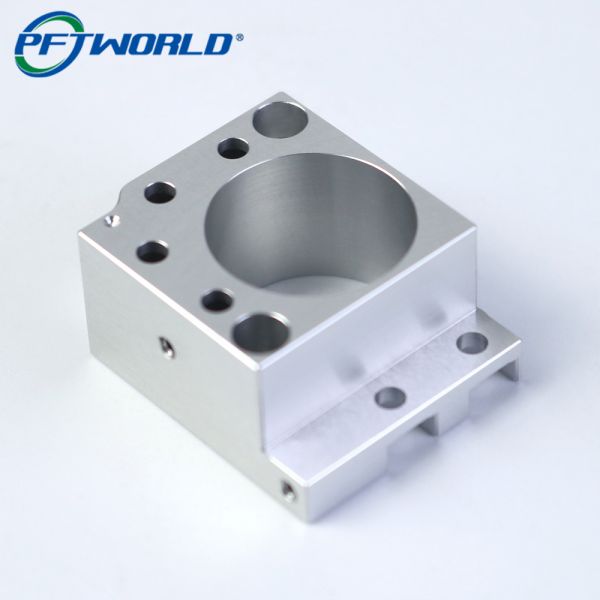
2. Common Aluminum Grades for CNC Machining
| Aluminum Grade | Key Feature | Typical Applications |
|---|---|---|
| 6061 | Good corrosion resistance & machinability | Enclosures, automotive parts |
| 7075 | High strength, aerospace-grade | Aerospace brackets, structural parts |
| 2024 | Excellent fatigue resistance | Aircraft components, heavy-duty frames |
| 5052 | Corrosion-resistant | Marine applications, electrical panels |
Selecting the proper alloy affects tool selection, feed rates, and achievable surface finish.
3. CNC Machining Tolerance Guidelines for Aluminum
Tolerance determines fit, assembly, and functional performance.
Typical Tolerances
| Feature Type | Standard Tolerance | High-Precision Option |
|---|---|---|
| Linear dimensions | ±0.05 mm | ±0.01 mm |
| Holes & bores | ±0.02 mm | ±0.005 mm |
| Flatness | 0.05 mm | 0.01 mm |
| Parallelism | 0.05 mm | 0.01 mm |
Best practices:
-
Use light finishing cuts to maintain tight tolerances
-
Avoid excessive clamping pressure to reduce deformation
-
Verify tolerances with CMM or digital calipers
4. Surface Finish Considerations
Surface finish affects friction, wear, appearance, and downstream processes.
Common Surface Finish Requirements
| Application | Recommended Ra |
|---|---|
| Mechanical parts | 0.8–1.6 μm |
| Cosmetic / visible surfaces | 0.4–0.8 μm |
| Electrical or thermal contact surfaces | ≤0.4 μm |
CNC machining tips for smoother surfaces:
-
Use sharp carbide or coated tools
-
Apply high spindle speeds and low feed rates for finishing passes
-
Implement coolant or air blast to prevent heat buildup
-
Deburr edges after machining to avoid burrs
5. CNC Machining Parameters for Aluminum
Optimizing cutting parameters ensures accuracy, efficiency, and long tool life.
| Parameter | Typical Range |
|---|---|
| Spindle speed | 6,000–12,000 RPM |
| Feed rate | 0.05–0.25 mm/tooth |
| Depth of cut | 0.5–3 mm |
| Coolant | Water-soluble cutting fluid or air blast |
Practical advice: High-speed CNC milling with shallow finishing cuts improves surface finish while maintaining tight tolerances.
6. Tool Selection for Aluminum Parts
Proper tooling is crucial for precision aluminum machining:
-
Carbide end mills: high wear resistance
-
Aluminum-specific tool geometry: polished flutes, high rake angle (12–20°)
-
Diamond-coated tools: for ultra-fine surface finishing
-
Custom fixtures: reduce deformation for thin or lightweight parts
7. Inspection and Quality Assurance
Aluminum parts must undergo thorough inspection before delivery:
-
Dimensional inspection: CMM, micrometers, height gauges
-
Surface roughness check: Ra measurement
-
Visual inspection: burrs, scratches, or oxidation
-
Functional test: fit check with mating components
High-precision parts may require ±0.01 mm verification for critical assemblies like aerospace or EV components.
8. Finishing and Post-Processing
After CNC machining, aluminum parts may receive additional treatments:
-
Anodizing: corrosion protection, cosmetic finish
-
Powder coating or painting: surface durability and appearance
-
Polishing: for low-friction or visible surfaces
-
Deburring: to remove micro-burrs after machining
These processes enhance durability, performance, and aesthetics.
Key Takeaways
To produce high-quality CNC machined aluminum parts in 2026:
-
Select the right alloy for strength, corrosion resistance, and machinability
-
Maintain tight tolerances (±0.01–0.05 mm) depending on application
-
Optimize surface finish for friction, appearance, or electrical/thermal performance
-
Use appropriate tooling and cutting parameters to minimize burrs and deformation
-
Perform thorough inspection before delivery to ensure functional and cosmetic quality
CNC machining allows both prototype and high-volume production of aluminum parts with precision, repeatability, and superior surface finish.
Post time: Mar-05-2026


