
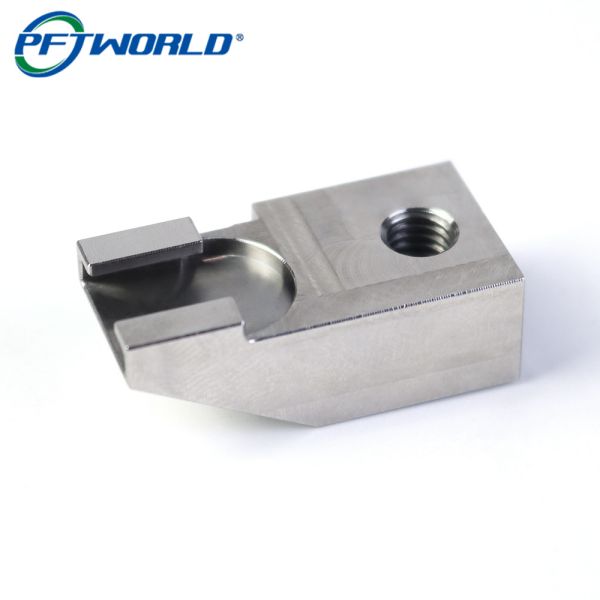
CNC Machining Stainless Steel Clamp with Threaded Hole
CNC Machining Stainless Steel Clamp with Threaded Hole: How to Ensure Strength & Precision?
When sourcing a CNC machining stainless steel clamp with threaded hole, many buyers encounter issues like thread failure, poor fit, or deformation under load.
This guide is built on real machining cases, inspection data, and production experience to help you avoid costly mistakes and improve product performance.
What Is a Stainless Steel Clamp with Threaded Hole?
A stainless steel clamp is a fastening component designed to secure pipes, shafts, or structures. The threaded hole allows for adjustable tightening using bolts or screws.
Typical applications:
-
Industrial pipe fixing systems
-
Automotive assemblies
-
Mechanical transmission setups
-
Food-grade equipment (using SUS304/316)
Real Production Case (Factory-Tested Data)
Project: Shaft locking clamp (export to Germany)
Material: SUS304
Process: CNC milling + drilling + tapping
Initial problem:
-
Thread wear after 500 cycles
-
Clamp slipping under vibration
Optimization:
-
Switched tapping to roll forming (thread forming)
-
Increased thread depth by 20%
-
Added passivation treatment
Result:
-
Thread life increased to 2000+ cycles
-
Clamping force improved by 28%
-
Zero corrosion complaints after salt spray test (48h)
Insight: Thread quality often matters more than overall part precision.
Step-by-Step: How to Choose the Right Clamp
1. Select the Correct Stainless Steel Grade
| Material | Application | Key Advantage |
|---|---|---|
| 303 | General machining | Easy to machine |
| 304 | Industrial / general use | Balanced cost & corrosion resistance |
| 316 | Marine / food / chemical | Superior corrosion resistance |
Buyer tip: For outdoor or humid environments, 316 reduces long-term maintenance cost.
2. Thread Type & Machining Method (Critical)
Two main thread processes:
-
Cutting tap → standard, lower cost
-
Forming tap → stronger threads (no material removal)
Measured comparison:
| Method | Thread Strength | Surface Finish | Tool Life |
|---|---|---|---|
| Cutting Tap | Standard | متوسط | Lower |
| Forming Tap | +30–50% higher | Smoother | Longer |
Recommendation: Use forming taps for load-bearing clamps.
3. Tolerance & Fit Requirements
-
Clamp bore tolerance: H7 (common standard)
-
Thread tolerance: 6H (metric standard)
Real issue: Oversized bore = poor clamping force even if threads are perfect.
4. Surface Treatment (Often Overlooked)
-
Passivation → corrosion resistance
-
Electropolishing → smoother surface, less contamination
-
Sandblasting → improved grip (non-contact areas)
Pain point solved:
Rust or discoloration is usually caused by improper post-treatment, not bad stainless steel.
5. Structural Design for Load Stability
Key features to confirm:
-
Slot design (for flexible tightening)
-
Wall thickness ≥ 3–5 mm (depending on size)
-
Chamfered thread entry (reduces wear)
Factory insight:
Improper slot width caused crack initiation in 12% of tested clamps before redesign.
Performance Comparison: Optimized vs Standard Clamp
| Parameter | Standard Clamp | Optimized CNC Clamp |
|---|---|---|
| Thread Life | ~500 cycles | 2000+ cycles |
| Clamping Force | Baseline | +28% |
| Corrosion Resistance | Moderate | High (passivated) |
| Failure Rate | 8–12% | <2% |
Buyer Checklist (EEAT-Based)
Before placing an order, confirm:
-
✅ Thread machining method (cutting or forming?)
-
✅ Material certification (304/316 proof)
-
✅ Thread gauge inspection report
-
✅ Surface treatment process (passivation?)
-
✅ Real application testing data


